Tuesday, 19 January 2016

Tuesday, 12 January 2016
Research and Planning: Preliminary Task Evaluation
I am happy with how the editing of the beginning of Preliminary task turned out. The scene begins with a non-diegetic soundtrack, which gives the scene an ominous feel and foreshadows what is going to happen next.
The cuts of Roselyn (The violent teacher) are continuous and flow well within the sequence this shows our use of match on action. However, we can see a backpack and cardboard box which is detrimental to the mise-en-scene as it distracts from the actors faces so we do not pay as much attention on the emotions on their faces. The audience hears the diegetic dialogue between Kira and Roselyn as Roselyn is fired, whilst this conversation is going on shot/reverse shots are used, this builds tension and an atmosphere of fear and anticipation.
To improve on my preliminary task, I would spend more time on casting to ensure I had the right person playing each role. Also from this I have learned that I need to be aware of the setting of my film and change the mise-en-scene accordingly. It has helped me understand the logistics of making a film and I now understand the different effects that different camera angles and shots have.
If I don't have the best actors in my opening sequence, I now know that dialogue should be kept to a minimum. From this experience I have learned that the editing of a film can completely change it, for example changing the sequence of events could make the story totally different.
My opening sequence followed Todorov's theory of equilibrium as we see Roselyn walking down the hall as all appears to be normal, we then reach the disequilibrium when she gets fired and the camera fades to black before we reach the resolution. This made me realise, for my opening sequence, how little time I have to tell the story.
From directing and producing my own preliminary I have learned a lot and I will apply this knowledge when it comes to making my opening sequence. I know the importance of mise-en-scene as it can clearly tell you the genre of a film and also it can be cleverly used to give away or hint at plot lines.
Research and Planning: Results of Questionnaire
https://onedrive.live.com/redir?resid=3FCB5FA07D3AB74A!260&authkey=!AB0wlzprO0TnTV4&ithint=file%2cpptx
I have presented the results of my questionnaire on a PowerPoint, I did this because it allowed me to easily display graphs of the results whilst analysing them at the same time.To create my graphs I used the data from my questionnaire and put it into Excel, I used a variety of graphs for the different questions. To analyse this data I transferred them onto a PowerPoint where I wrote a few sentences about them and how I would relate this to my opening sequence. It helped me have a better idea of my target audience.
I have presented the results of my questionnaire on a PowerPoint, I did this because it allowed me to easily display graphs of the results whilst analysing them at the same time.To create my graphs I used the data from my questionnaire and put it into Excel, I used a variety of graphs for the different questions. To analyse this data I transferred them onto a PowerPoint where I wrote a few sentences about them and how I would relate this to my opening sequence. It helped me have a better idea of my target audience.
Research and Planning: Textual Analysis
Textual Analysis Cape Fear Edit from Ella Penfold on Vimeo.
Textual Analysis Vertigo Edit from Ella Penfold on Vimeo.
Seven Textual Analysis from Ella Penfold on Vimeo.
The aim of my textual analyses was to better understand opening sequences of films and I wanted to find out how I could relate this to my own sequence. I began by choosing thriller films which interested me and that could help me form my own idea for a film. I ended up choosing Seven, Vertigo and Cape Fear. I had previously watched these films and remember feeling tense this is why I wanted to revisit them in more depth.
To start I watched each opening sequence and took notes on the camera angles/shots, editing, sound and mise-en-scene. I explored why certain camera angles/shots and editing
were chosen and the overall impact this had on the audience. In each opening sequence music was used non-diegetically to set the scene and build tension, which is typical for the thriller genre. I also researched into the common conventions of the thriller genre to see how these 3 films matched up to them. I noticed that in Vertigo and Cape Fear dialogue was barely used in the opening sequences, I thought this was very effective and I want to do the same within my sequence.
After I made these notes on the opening sequences, I wrote them up in sentences making sure to include uses of key theorists like Levi Strauss and Barthes. Whilst watching them I noted down timings so that it would be easier to edit later on. I then recorded a voice over with a voice recorder. Once I was happy with my analysis of Cape Fear, Vertigo and Seven I uploaded and edited these on Adobe premier.
Adobe premier allowed me to easily edit my textual analysis with my voice over. The video of each opening sequence was uploaded along with the voice over, at first these did not match exactly as I needed extra time to talk about certain things within the sequence. To combat this I took screenshots of the film when I needed more time to talk and inserted this into the timeline.
Overall, the textual analysis of Cape Fear, Vertigo and Seven was very helpful for me when starting to create my own idea for a thriller opening sequence. I now understand all the thought that goes behind creating a sequence and how a camera angle/shot, the mise-en-scene, editing and sound can totally change the effect of a film. I learned how there are certain conventions for the thriller genre which enhance the experience of the audience and clearly show that it is in fact a thriller. I will apply this knowledge to my own opening sequence and will think carefully about all aspects of my film and how this will affect the audience.
Textual Analysis Vertigo Edit from Ella Penfold on Vimeo.
Seven Textual Analysis from Ella Penfold on Vimeo.
The aim of my textual analyses was to better understand opening sequences of films and I wanted to find out how I could relate this to my own sequence. I began by choosing thriller films which interested me and that could help me form my own idea for a film. I ended up choosing Seven, Vertigo and Cape Fear. I had previously watched these films and remember feeling tense this is why I wanted to revisit them in more depth.
To start I watched each opening sequence and took notes on the camera angles/shots, editing, sound and mise-en-scene. I explored why certain camera angles/shots and editing
were chosen and the overall impact this had on the audience. In each opening sequence music was used non-diegetically to set the scene and build tension, which is typical for the thriller genre. I also researched into the common conventions of the thriller genre to see how these 3 films matched up to them. I noticed that in Vertigo and Cape Fear dialogue was barely used in the opening sequences, I thought this was very effective and I want to do the same within my sequence.
After I made these notes on the opening sequences, I wrote them up in sentences making sure to include uses of key theorists like Levi Strauss and Barthes. Whilst watching them I noted down timings so that it would be easier to edit later on. I then recorded a voice over with a voice recorder. Once I was happy with my analysis of Cape Fear, Vertigo and Seven I uploaded and edited these on Adobe premier.
Adobe premier allowed me to easily edit my textual analysis with my voice over. The video of each opening sequence was uploaded along with the voice over, at first these did not match exactly as I needed extra time to talk about certain things within the sequence. To combat this I took screenshots of the film when I needed more time to talk and inserted this into the timeline.
Overall, the textual analysis of Cape Fear, Vertigo and Seven was very helpful for me when starting to create my own idea for a thriller opening sequence. I now understand all the thought that goes behind creating a sequence and how a camera angle/shot, the mise-en-scene, editing and sound can totally change the effect of a film. I learned how there are certain conventions for the thriller genre which enhance the experience of the audience and clearly show that it is in fact a thriller. I will apply this knowledge to my own opening sequence and will think carefully about all aspects of my film and how this will affect the audience.
Research and Planning: Further Research
Colour in
Film
For my opening sequence I decided on a warm and earthy
colour palette, this would be used for props and then later enhanced through
editing. I wanted this colour palette to extend to the costume of the
characters and this would give subtle hints as to their personality and where
they belong in the story.
Due to the fact that for my opening sequence I wasn't going
to be filming anywhere particularly visually interesting, I decided I wanted to
play with colour in my film. The use of colour in film can be very effective
and so I did some research. Upon watching The Wizard of Oz, Sin City and Amelie
again I was inspired to use a selection of colours within my opening sequence.
In these films colour almost became a character of its own and I was interested
in replicating this.

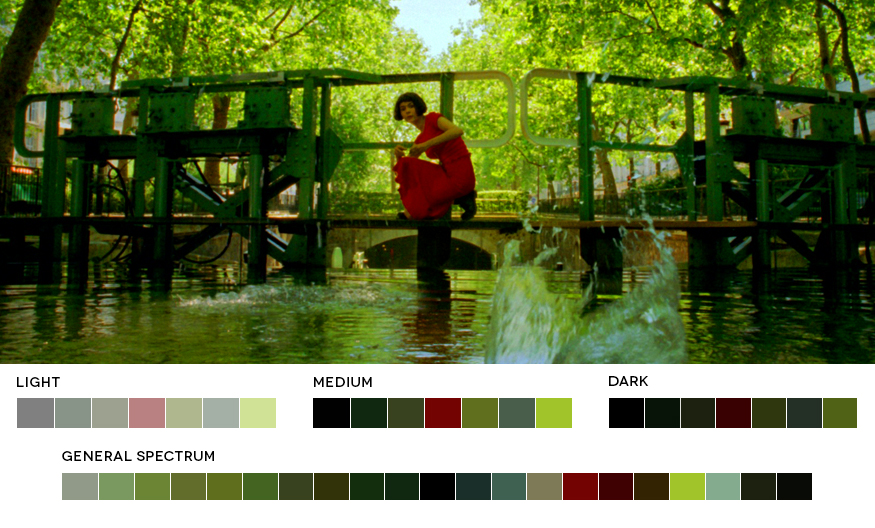


Although many thriller films are set a cool and harsh
colouring, I wanted something different. I think the warmer colours immerse the
viewer and present the sequence as a memory, as well as this these tones help
to represent Todorov’s theory of equilibrium because all appears to be well.
Furthermore the earthier, warmer colours will illustrate that this is a youthful
story and represents the teenagers as innocent and in fact naïve. This separates it from typical thrillers as
the audience is much younger and therefore still becoming adult. Also the
colours give the opening sequence a sense of liveliness which makes it more
visually interesting to the audience as it helps to tell the story. In addition
the fact that cold, dull colours aren't used present it as less gritty and
real, although it is set in a real life situation which could easily occur the
warm colours make it feel hyper-real and nearly dreamlike.
In Amelie I also noticed that cool colours like blue were
used sparingly and they created a lot of impact on screen when contrasted with
the earthy hues. It allowed for emotion to be conveyed easily and importance on
a prop or character could easily be done through colour. Equally Sin City used
colours other than black and white to do this and this gave a striking effect.
Famously in The Wizard of Oz the colour in the film turns from sepia to full on
colour, this represented the disequilibrium of the storm at the beginning and
shows Dorothy’s mundane life in Kansas as well as her fond memories of it. I
also enjoyed how distinctly you could tell a film was a film noir by its use of
dramatic lighting, although this wouldn't work in my film I found it very
interesting.

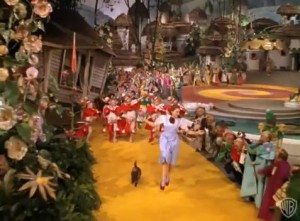
Principally, my aim was to make my opening sequence more visually interesting through the use of a colour palette which would be emphasised through editing. I wanted warm and earthy tones to represent the innocence of the main characters within the sequence.
Quentin Tarantino
Stemming from this use of colour I wanted in my film and having it look very stylistic, I also researched into the director Quentin Tarantino as he is know for the specific style of his films which includes the mise-en-scene, cinematography and most notably music.
Upon watching many of his films again I saw that in a lot of his work there is significant attention to detail with his titles and in many of his films there are chapters to his scenes. I wanted to apply this to my own opening sequence, also there is a specific style to the fonts used they're always well either either in white or yellow. Furthermore I wanted to use some sort of pop music as in all of Tarantino’s films he contrasts upbeat music with intense scenes.However, this needed to relate back to thriller films, in my opening sequence I plan to use a song called Your Prayers by The Agrarians as it still has a pop feel to it but this is in combination with an eerie and echoed sound, which links back to the genre by creating mystery. Therefore it will be illustrate Barthes’ enigma code.
Since my target audience are teenagers I wanted something that was not too serious and geared towards adults as often times young people can be put off by thrillers that seem too dramatic as they can appear dull and like they are taking themselves too seriously. By taking inspiration from Tarantino I can make my thriller more appealing to a younger audience, especially females. Quentin Tarantino continuously portrays women in strong roles, I want this to be reflected within my opening sequence too. Consequently, I will represent the young women in my film as strong-willed and independent this is unusual for the thriller genre and will break stereotypes as in some popular thrillers there are either no main female characters (especially protagonists) or they simply only act as damsels in distress (as described by Propp).

Because music is so integral to Tarantino and his films, I also wanted to emulate this but I will only use 1 song as 2 minutes is a very short period of time. I will be cautious when producing my own thriller film as I don't want to draw too heavily from Tarantino, which could cause my film to look like a cheap imitation. To avoid this I will stick to my original plot and keep dialogue to a minimum, although they will be quite similar stylistically the actual content will be different. The characters in mine will be more everyday and relatable so as to mirror the findings from my questionnaire.


Research and Planning: Treatment
Link to treatment-
https://www.powtoon.com/online-presentation/fcYsvalXlCD/opening-sequence-treatment/#/
I
chose to show my treatment on an online presentation website. This is
because I felt it made it look more professional and sleek. I think the
treatment is concise and it clearly sums up my idea for an opening
sequence. Above is the link to the presentation I created, to start I filled out a table to plan for my pitch and from this I made mt treatment.
Research and Planning: Character Profiles
To create my character profiles I used a a website called animoto this allowed me to create a montage of both images and text with music in the background. I then uploaded this to vimeo. Unfortunately I only had a free trial so there is a watermark on it, however I am happy with how it turned out.
Research and Planning: Storyboard


I created a table to draw my storyboard that resembled those of real media productions, I drew the images of what I wanted to film. This included shot types, numbers and durations- this will help me stay organised whilst filming.
Research and Planning: Script


I made a script on a programme called Celtx, I tried to make it look professional and so I researched other film scripts like that of The Dark Knight. This format also allowed me to make notes on the side whilst filming.
Research and Planning: Risk Assessment and Location Recce
location recce from Ella Penfold on Vimeo.
For my location recce and risk assessment I decided to film them together, I wanted to show it visually and I though that by filming it you get a better understanding of the location. I started by filling out a table for my location recce and risk assessment and then I filmed the location. I uploaded this onto Abode premier and recorded a voice over for the location recce. To separate the risk assessment I added text, this was so it would match the part of the location that I was writing about.
From this I learned about the safety of the cast and crew members and how I would need to take this into account when filming. It also made me understand my location more and how I could take this into account when creating my storyboard. Furthermore it allowed me to see when the best lighting would be available for filming and I will use this knowledge when actually filming.
For my location recce and risk assessment I decided to film them together, I wanted to show it visually and I though that by filming it you get a better understanding of the location. I started by filling out a table for my location recce and risk assessment and then I filmed the location. I uploaded this onto Abode premier and recorded a voice over for the location recce. To separate the risk assessment I added text, this was so it would match the part of the location that I was writing about.
From this I learned about the safety of the cast and crew members and how I would need to take this into account when filming. It also made me understand my location more and how I could take this into account when creating my storyboard. Furthermore it allowed me to see when the best lighting would be available for filming and I will use this knowledge when actually filming.
Tuesday, 5 January 2016
Research and Planning : Target Market
Target Audience Profile from Ella Penfold on Vimeo.
To create this I used a website called powtoon, it allowed me to creatively present my target audience with images and text. It is more visually interesting than just a powerpoint. For this presentation I used a variety of slides with different visual aids so that you can a better understanding of who the target market is. When creating this it made me think more in depth about how this audience and the results from my original questionnaire would inform my opening sequence. It also made sure that I always remembered who I was making this film for.
The target market is very similar to me in terms of age, gender, ethnicity and background, this is a great advantage to me as I already see the film from the same perspective. However, I will have to make sure that I am not just making this opening sequence for myself but for the wider audience. Even though I am to make this film for my target market universal, I also understand that I cannot please everyone.
To create this I used a website called powtoon, it allowed me to creatively present my target audience with images and text. It is more visually interesting than just a powerpoint. For this presentation I used a variety of slides with different visual aids so that you can a better understanding of who the target market is. When creating this it made me think more in depth about how this audience and the results from my original questionnaire would inform my opening sequence. It also made sure that I always remembered who I was making this film for.
The target market is very similar to me in terms of age, gender, ethnicity and background, this is a great advantage to me as I already see the film from the same perspective. However, I will have to make sure that I am not just making this opening sequence for myself but for the wider audience. Even though I am to make this film for my target market universal, I also understand that I cannot please everyone.
Subscribe to:
Posts (Atom)